


How to Design a Pantry Closet: Shelf Depth, Spacing, Zones, and Storage Ideas
Blog The 10 Must-Have Features in a Pantry That Stays Organized

A well-designed pantry closet should make it easy to see what you have, reach what you need, and keep groceries organized without wasting valuable space. While pantry design can appear straightforward, details such as shelf depth, vertical spacing, storage zones, and accessibility can significantly affect how well the space functions.
The best pantry closets are designed around the household using them rather than around a standard set of shelves. Before choosing materials or storage accessories, it helps to understand a few fundamental pantry design principles.
Start With How the Pantry Will Be Used
Before determining shelf dimensions, consider what actually needs to be stored.
Some households primarily need space for canned goods, snacks, and dry ingredients. Others may need to accommodate small appliances, bulk purchases, serving pieces, beverages, pet supplies, or oversized containers.
Create a rough inventory of the items that regularly occupy the pantry. Categories may include:
- Canned and jarred foods
- Pasta, rice, cereal, and dry goods
- Baking supplies
- Snacks
- Spices and condiments
- Bottled beverages
- Paper products
- Small kitchen appliances
- Bulk food purchases
- Serving pieces and entertaining supplies
This inventory becomes the foundation for determining shelf dimensions and storage zones.
What Is the Best Shelf Depth for a Pantry Closet?
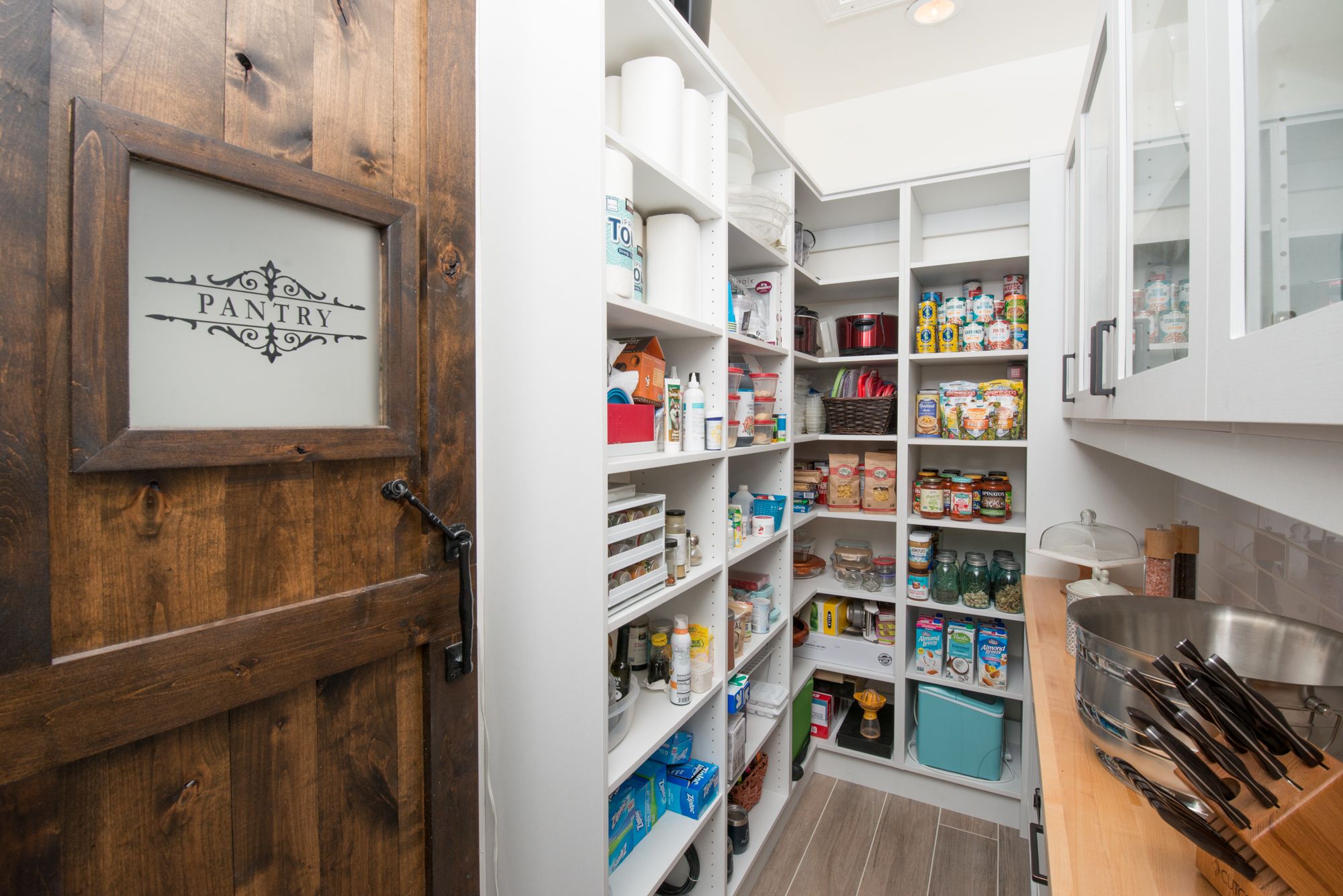
For many pantry closets, shelves approximately 12 to 16 inches deep provide a practical balance between storage capacity and visibility.
Deeper shelves are not automatically better.
A shelf that is too deep can create multiple rows of products, causing smaller items to disappear behind larger ones. The result is often wasted food and inefficient storage.
Different shelf depths can also be used within the same pantry.
Shallower shelves work well for spices, cans, jars, and smaller containers. Medium-depth shelves can accommodate cereal boxes, food storage containers, and everyday pantry staples. Deeper shelves may be useful for appliances, bulk packages, and larger baskets.
Customizing shelf depth according to what will actually be stored can make the pantry substantially easier to use.
How Much Space Should Be Between Pantry Shelves?
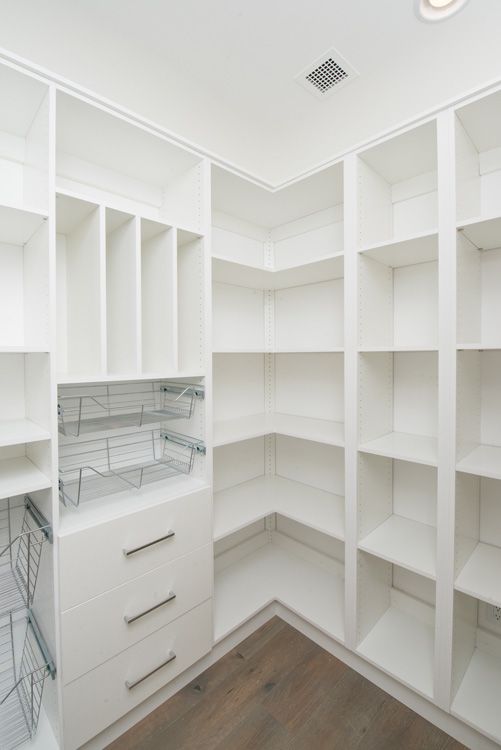
Pantry shelf spacing should vary rather than remain identical from top to bottom.
A pantry containing evenly spaced shelves may look orderly, but it often creates unused vertical space above short products while failing to accommodate taller items.
A more functional approach is to design several shelf heights.
Approximately 6 to 8 inches of vertical clearance can work for shorter cans, jars, and small containers. Around 10 to 12 inches can accommodate many everyday pantry products, while 14 to 18 inches may be appropriate for cereal boxes, bottles, appliances, and taller storage containers.
Adjustable shelving offers additional flexibility. As shopping habits, family needs, and kitchen appliances change, shelves can be repositioned instead of requiring the pantry to be redesigned.
Divide the Pantry Into Storage Zones
One of the easiest ways to improve pantry organization is to stop treating the pantry as a single storage area.
Instead, create dedicated zones.
Everyday Food Zone
Frequently used items should occupy the easiest-to-reach shelves. Breakfast foods, lunch ingredients, snacks, and common cooking staples belong between approximately waist and eye level whenever possible.
Baking and Cooking Zone
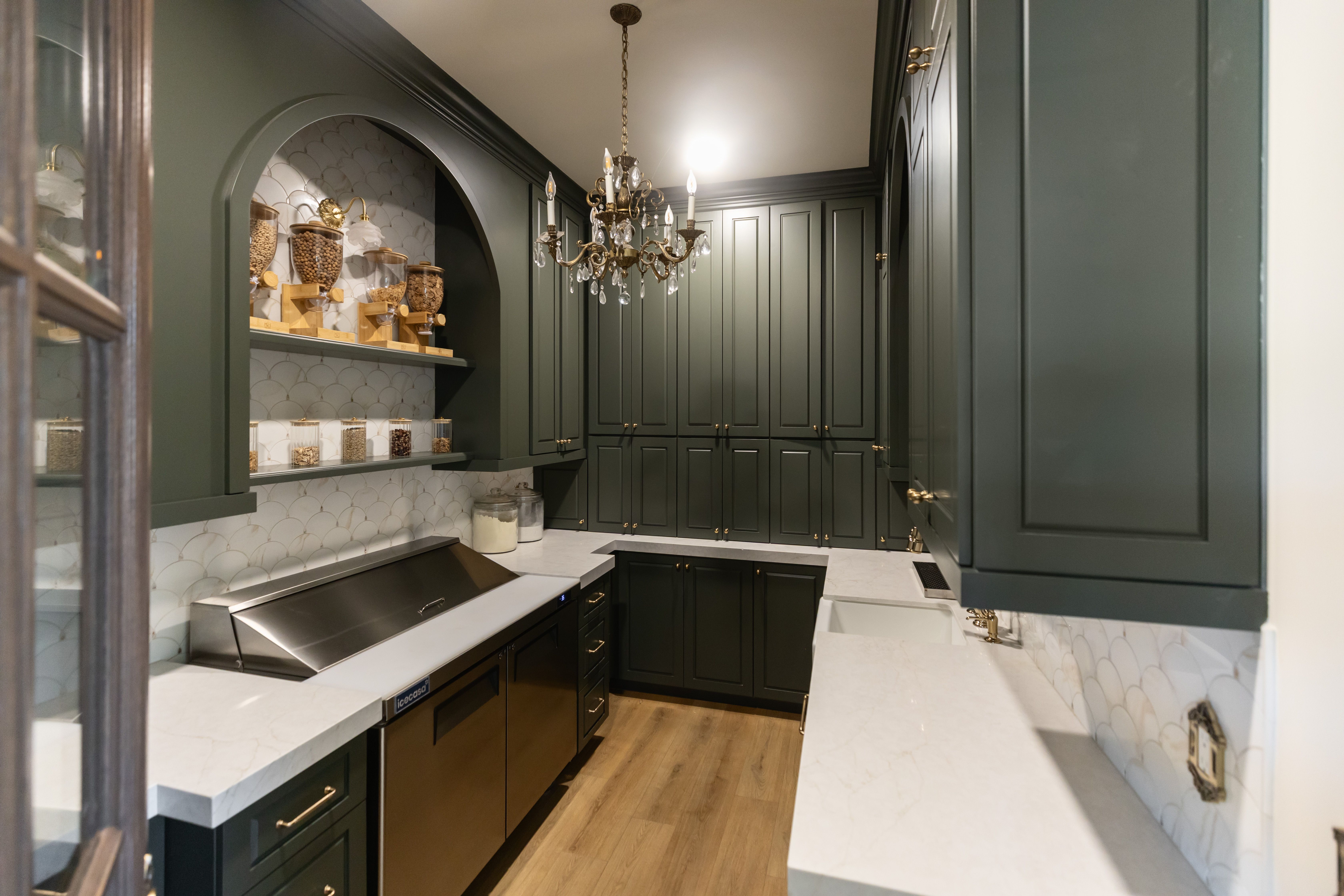
Flour, sugar, oils, baking ingredients, seasonings, and related supplies can be grouped together. Keeping complementary ingredients in one area reduces the amount of searching required while cooking.
Snack Zone
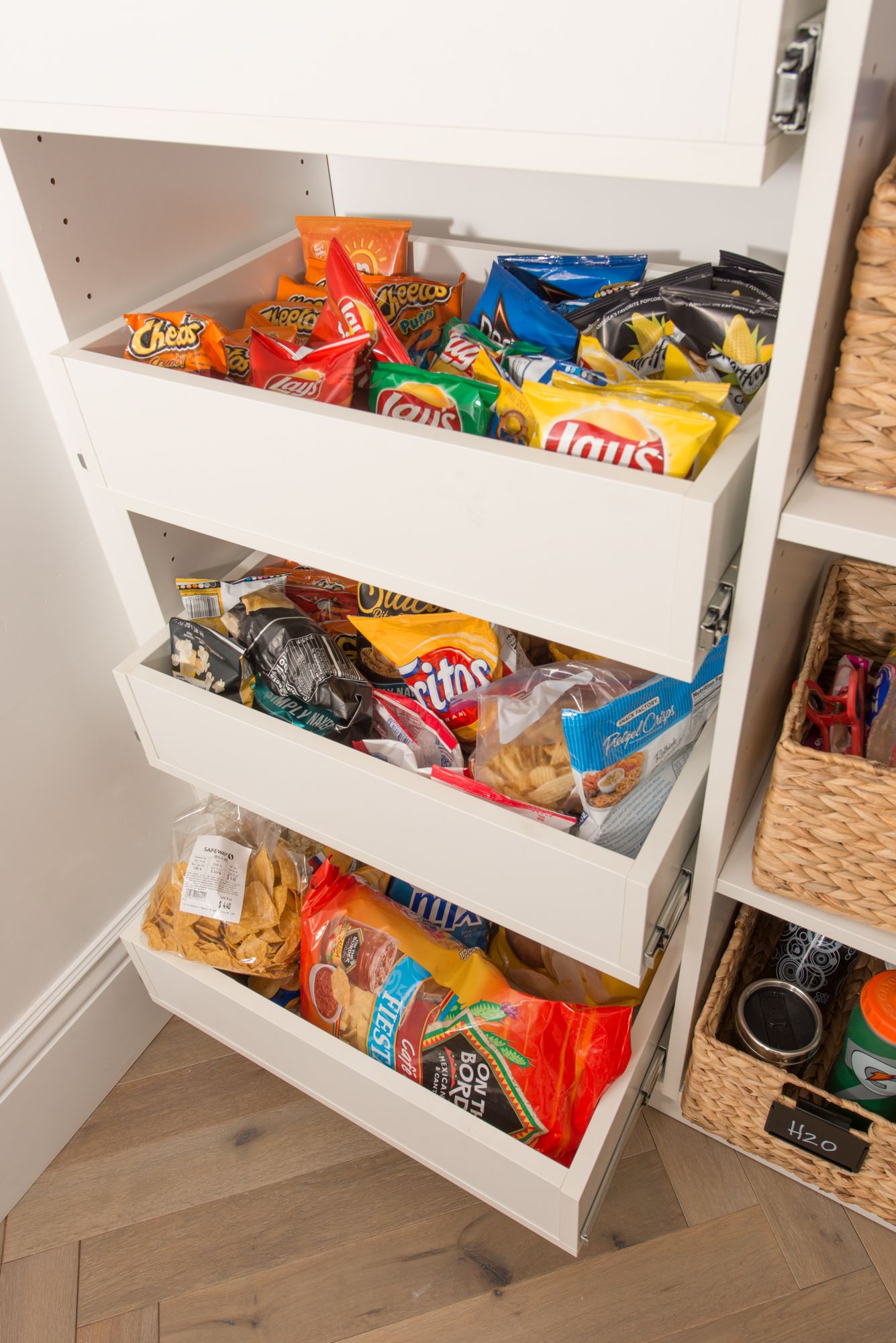
A dedicated snack area can make the pantry easier for children and adults to navigate. Bins or pull-out baskets are particularly useful for individually packaged foods.
Bulk Storage Zone
Large packages and backup products generally do not need prime shelf space. Lower shelves or less-accessible areas can hold bulk purchases until they are needed.
Appliance Zone
Small appliances such as mixers, blenders, slow cookers, and food processors require deeper and stronger storage surfaces. Appliances used frequently should remain reasonably accessible rather than being placed on the highest shelves.
Overflow Zone
Reserve part of the pantry for extra products, entertaining supplies, or less frequently used items. Creating an intentional overflow area prevents these products from gradually taking over the everyday storage zones.
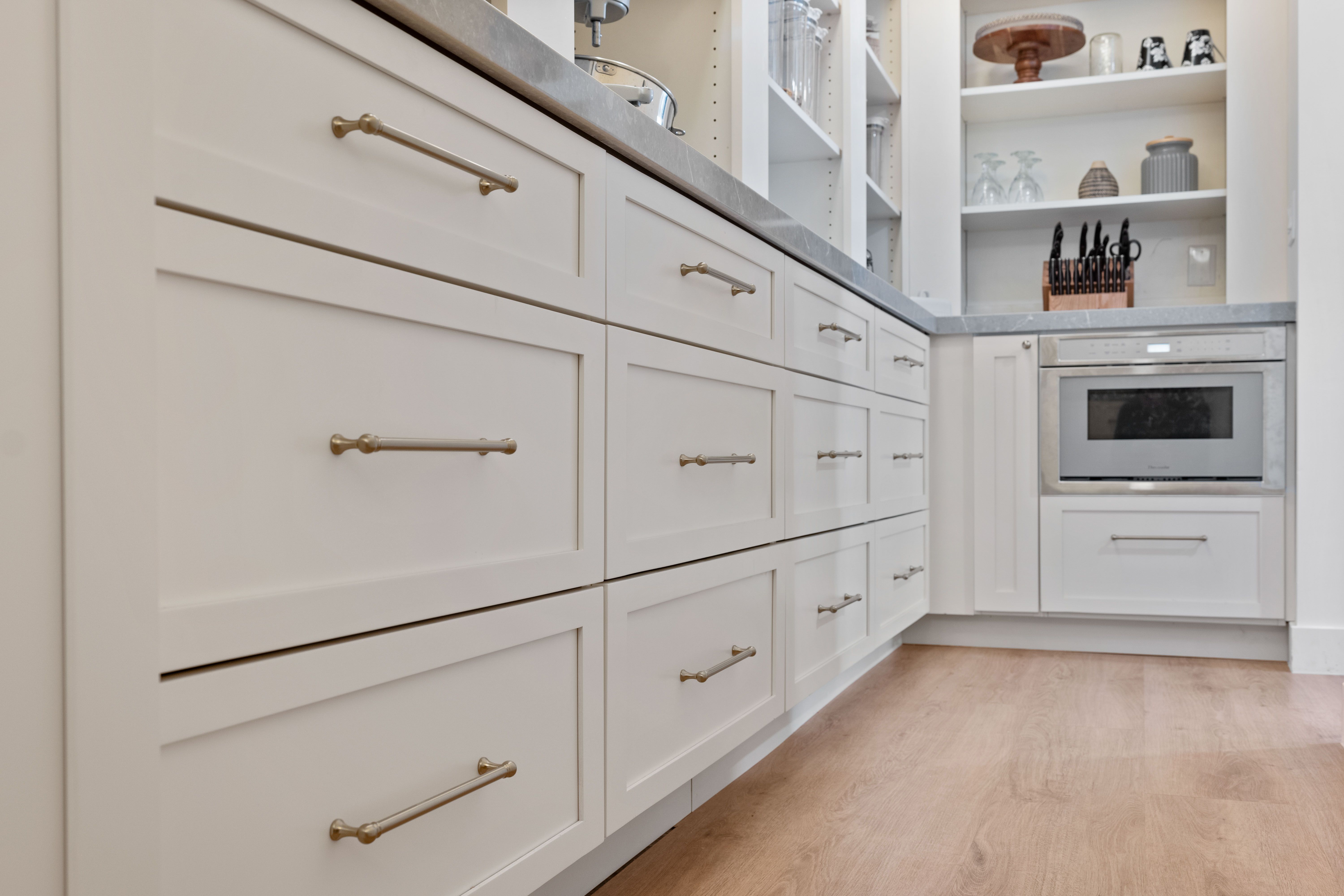
Use Drawers and Pull-Out Storage for Smaller Items
Shelves are not always the most efficient storage solution.
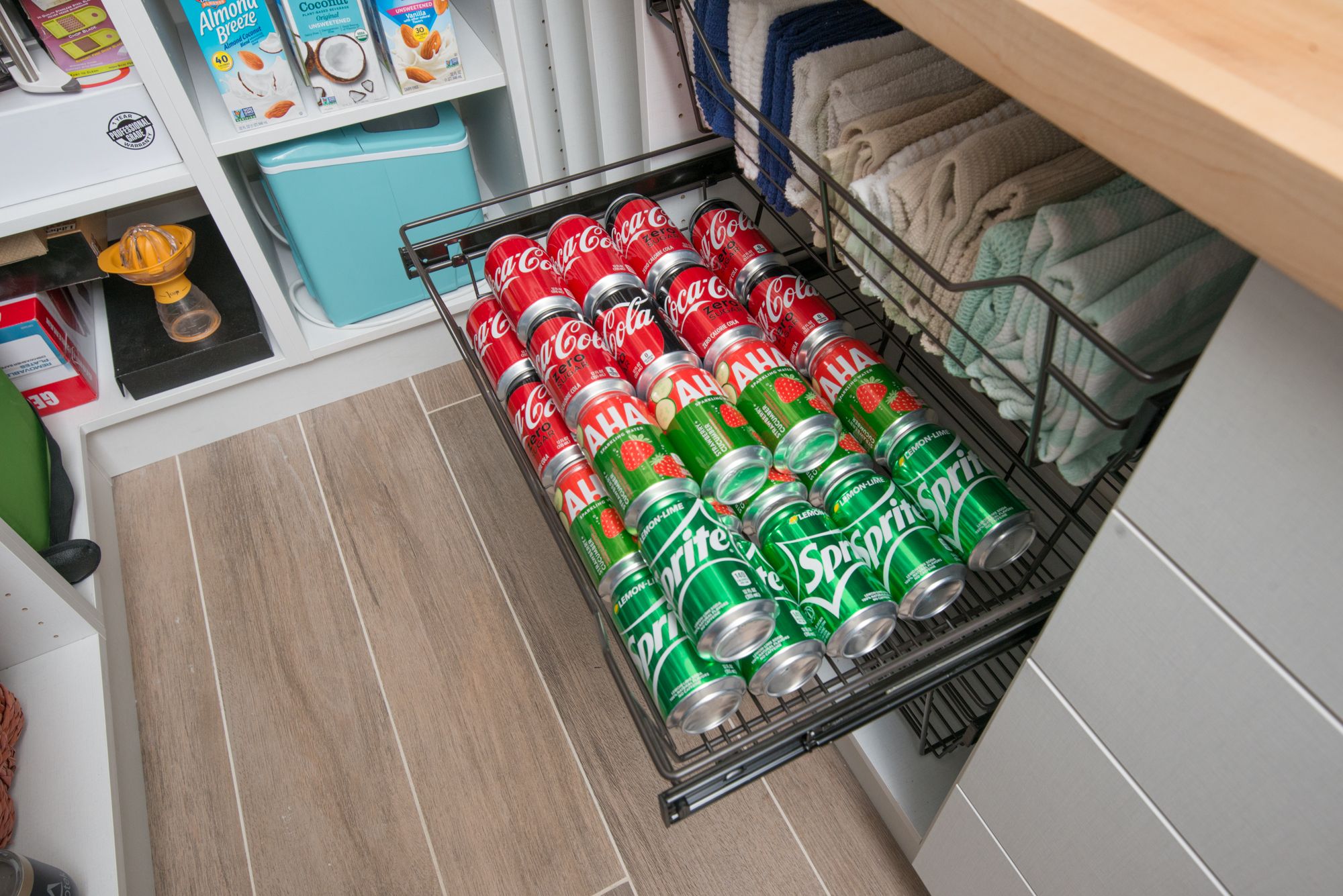
Deep drawers and pull-outs can dramatically improve access to smaller products because the contents come toward the user instead of requiring someone to reach into the back of a cabinet or shelf.
Pull-out storage can work particularly well for snacks, produce, baking supplies, packaged foods, and containers.
The advantage is visibility. Instead of discovering an expired product behind several other items months later, homeowners can see most of the drawer's contents at once.
Consider Corner Storage Carefully
Corners are one of the most challenging areas in pantry design.
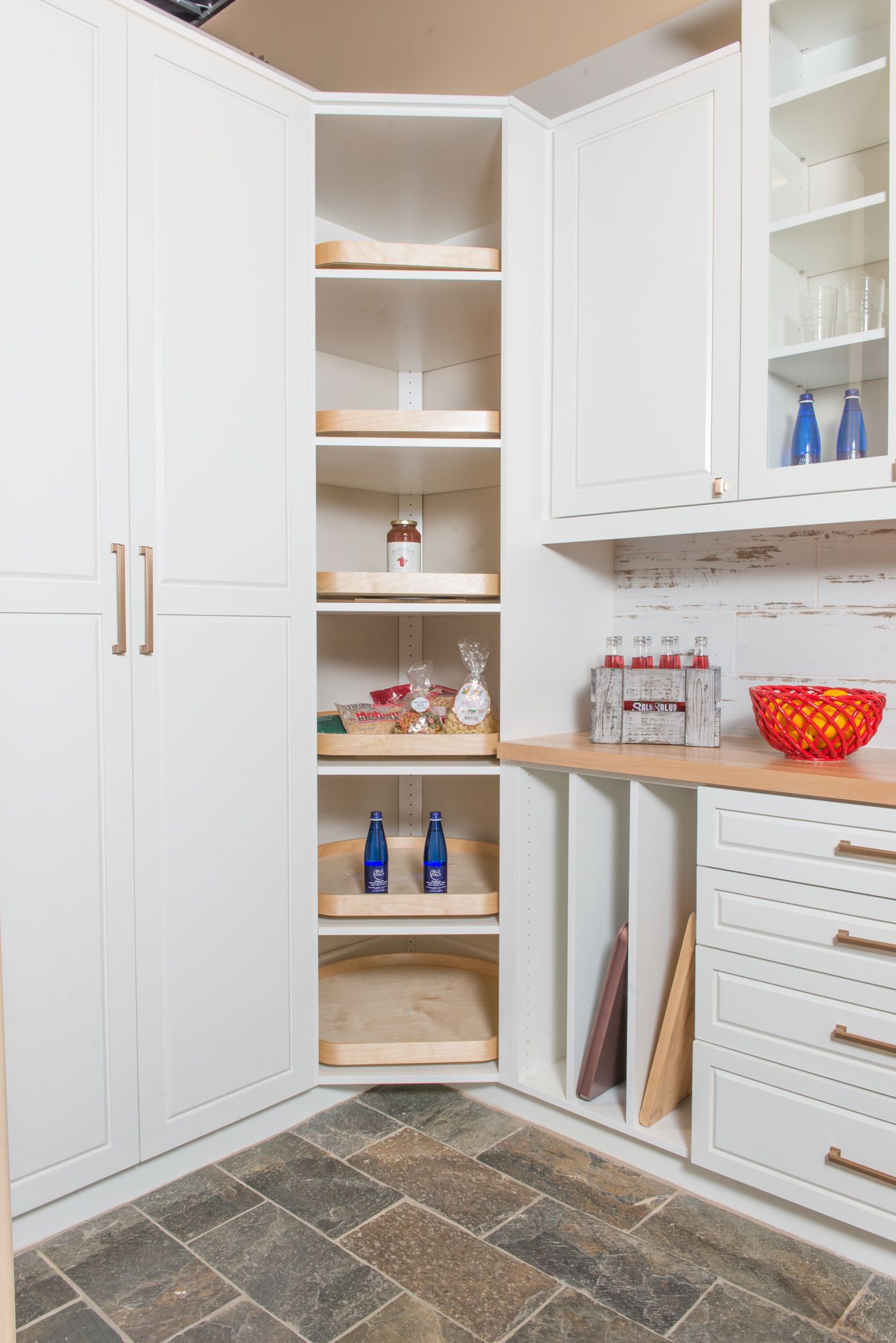
Simply extending shelves deeply into a corner can create storage that is technically available but difficult to access.
Several alternatives can work better, including angled corner shelves, rotating organizers, specialized corner storage systems, or configurations that deliberately reduce depth near the corner.
The objective should not be to maximize every cubic inch. It should be to maximize usable storage.
There is an important difference.
Make Frequently Used Items Easy to Reach
A practical pantry generally follows a simple hierarchy.
Everyday items belong between waist and eye level. Heavy products should remain lower. Lightweight and infrequently used items can occupy upper shelves.
Avoid placing heavy appliances or large containers overhead whenever possible. Although upper shelving can add meaningful capacity, it is usually better suited for lightweight products and items that are only occasionally needed.
Add Vertical Storage Where It Makes Sense
Pantry walls and doors can provide additional storage without requiring deeper shelves.
Depending on the pantry configuration, vertical storage might include narrow shelving, hooks, racks, or door-mounted organizers.
These areas can be useful for spices, wraps and foils, reusable shopping bags, cleaning accessories, or lightweight packaged products.
Vertical solutions are especially valuable in smaller pantry closets where floor space is limited.

Use Containers Strategically
Clear containers, baskets, bins, and labels can make a pantry easier to maintain, but homeowners do not necessarily need to transfer every grocery item into a matching container.
Containers are most valuable when they solve a specific storage problem.
Clear containers can make dry goods easier to monitor. Baskets can prevent small packages from spreading across shelves. Labels can help multiple family members return products to the correct zone.
The storage system should simplify pantry use rather than create another household task.
Don't Ignore Lighting
Lighting can have a surprisingly large impact on pantry functionality.
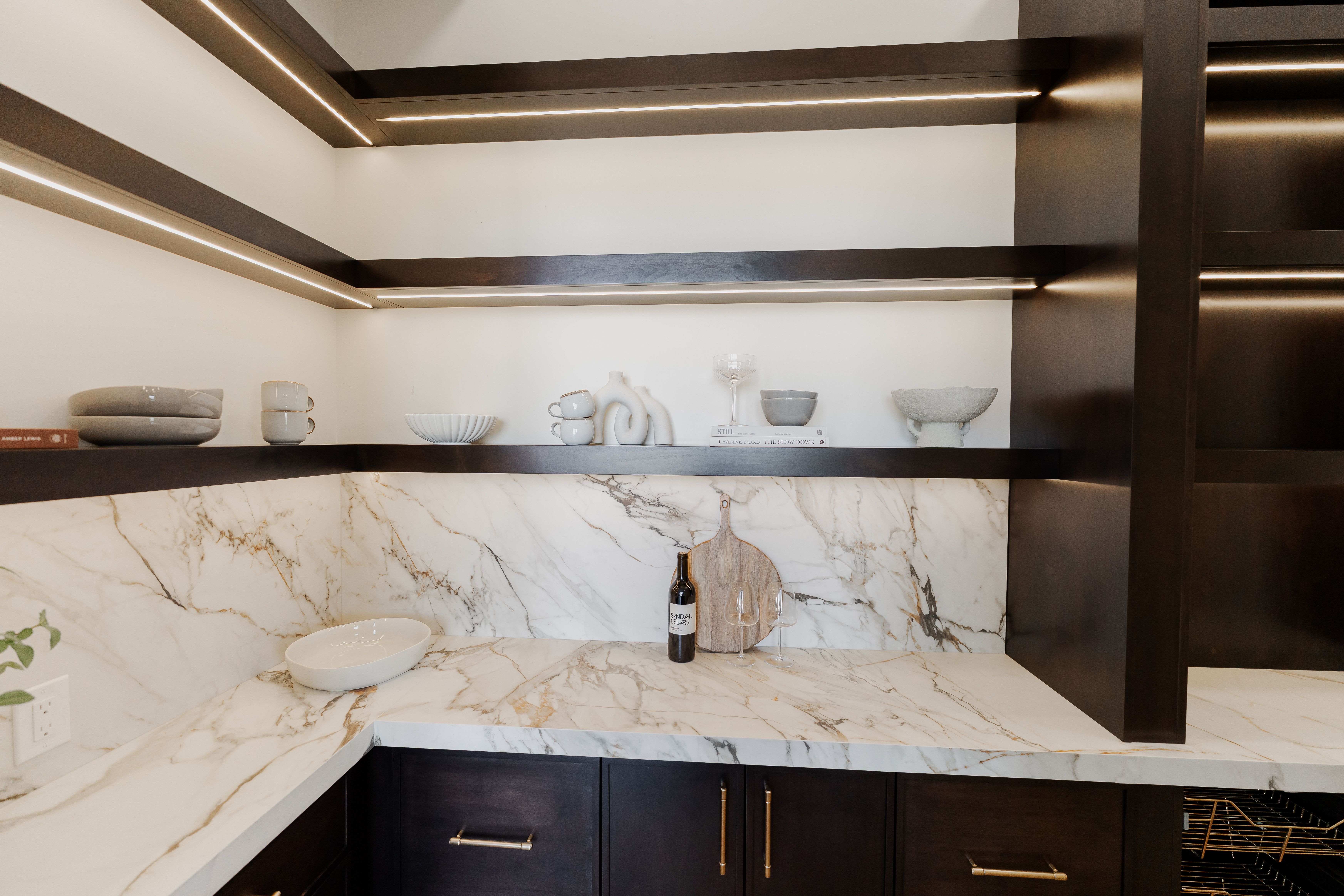
Deep shelves and tightly packed storage can create shadows, particularly in reach-in and walk-in pantries. Good overhead lighting, integrated LED lighting, or strategically positioned illumination can make products considerably easier to locate.
Lighting becomes increasingly important as the pantry grows larger or includes cabinetry, drawers, and deeper shelving.
Plan for Adjustable Storage
A pantry designed around today's grocery list may not function equally well five years from now.
Families change. Children grow. Dietary habits shift. New appliances arrive. Shopping patterns evolve.
Adjustable shelves, configurable storage accessories, and flexible zones allow the pantry to adapt without requiring major remodeling.
This flexibility is one of the primary advantages of a professionally planned custom pantry system compared with fixed shelving installed without considering long-term use.
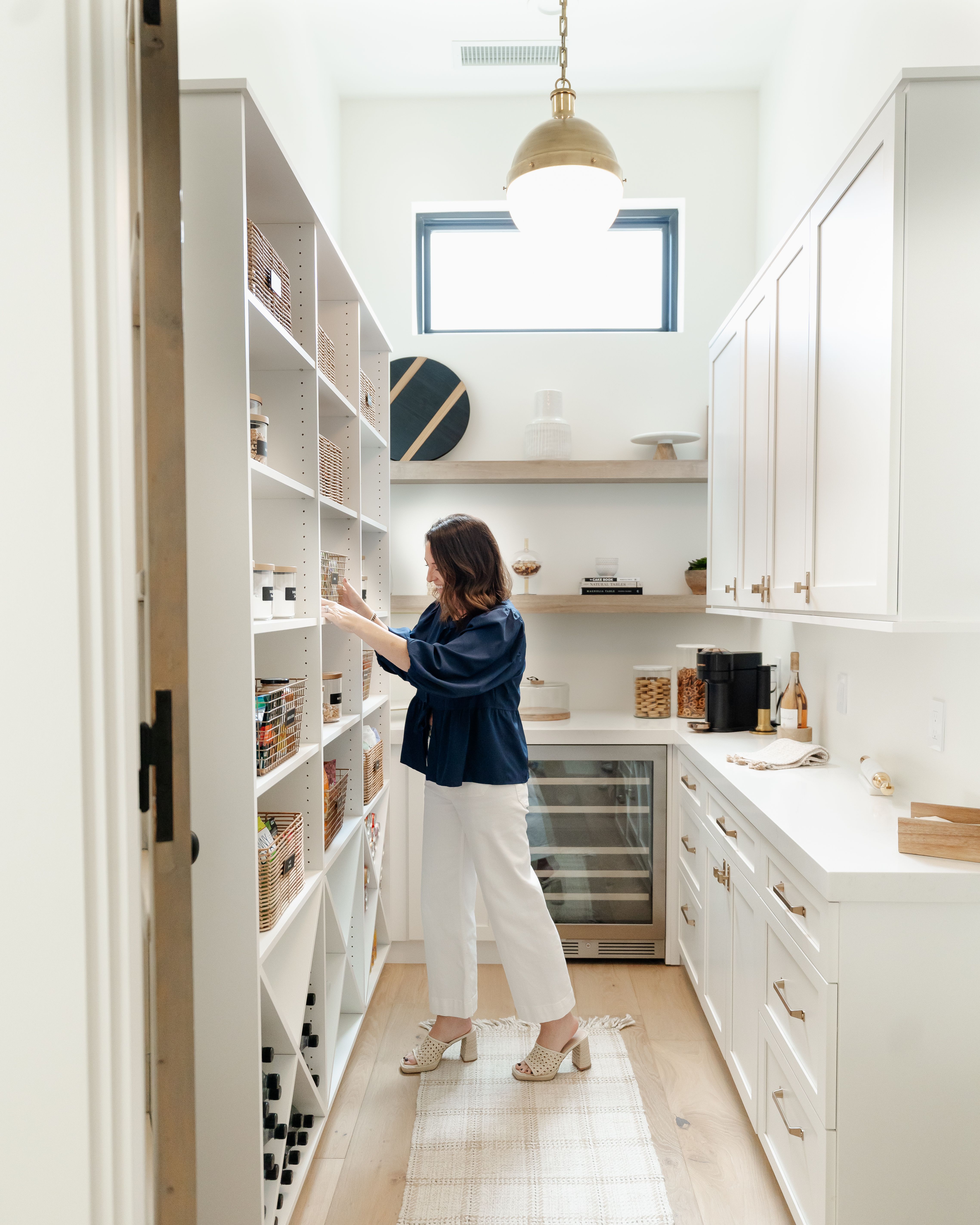
Pantry Storage Ideas Worth Considering
Depending on available space and budget, homeowners may want to incorporate several specialized features:
- Adjustable shelving
- Deep storage drawers
- Pull-out baskets
- Tray and cutting-board dividers
- Spice storage
- Vertical bottle storage
- Appliance shelves
- Door-mounted organizers
- Integrated lighting
- Labeled baskets and containers
- Countertop workspace
- Wine or beverage storage
- Dedicated recycling or household storage
Not every pantry needs every feature. The most effective designs select features based on the household's actual routines.
Walk-In Pantry vs. Reach-In Pantry Design
The same basic principles apply to both walk-in and reach-in pantries, but their layouts require different strategies.
Reach-in pantries benefit from shallower shelves, excellent visibility, adjustable storage, and efficient use of doors and vertical space.
Walk-in pantries provide greater flexibility but require more attention to circulation. Shelves that are too deep can reduce aisle space and make the pantry feel cramped despite its larger footprint.
In a walk-in pantry, maintaining comfortable clearance should take priority over adding unnecessarily deep shelving.
Common Pantry Design Mistakes
Many pantry problems originate during the design process rather than after installation.
One common mistake is making every shelf the same depth and height. Another is maximizing storage capacity without considering accessibility. Poor corner planning, inadequate lighting, overly deep shelves, and insufficient space for appliances can also reduce functionality.
Another frequent mistake is designing around appearance alone.
A pantry can look impressive immediately after installation but become frustrating once real groceries, appliances, and household supplies are introduced. Effective pantry design balances appearance with daily usability.
Should You Choose a Custom Pantry?
A basic pantry with standard shelving may be sufficient for a straightforward storage space. However, custom pantry design becomes more valuable when space is limited, the pantry has unusual dimensions, or the household needs to accommodate several different types of storage.
A professional designer can evaluate shelf depth, clearances, vertical storage, drawers, corners, lighting, and household routines as part of one integrated system.
This is particularly valuable when the pantry is being incorporated into a larger kitchen renovation or custom home organization project.
Frequently Asked Questions About Pantry Closet Design
How deep should pantry shelves be?
For many pantry closets, approximately 12 to 16 inches is a practical shelf depth. Shallower shelves can improve visibility for cans, jars, and spices, while deeper shelves may be appropriate for appliances and bulk products.
How much space should be between pantry shelves?
There is no single ideal spacing for every shelf. Smaller products may require only 6 to 8 inches of clearance, while everyday pantry goods may need approximately 10 to 12 inches. Taller products and appliances may require 14 to 18 inches or more.
Are adjustable pantry shelves worth it?
In most cases, yes. Adjustable shelving allows homeowners to modify the pantry as food storage needs, appliances, and household routines change.
What should go on the bottom shelves of a pantry?
Lower shelves are typically best for heavier items, bulk packages, beverages, appliances, and overflow products. Keeping heavier items lower also reduces the need to lift them overhead.
What should go on the highest pantry shelves?
Upper shelves are generally best for lightweight and infrequently used items, such as entertaining supplies, backup paper products, seasonal kitchen accessories, and overflow storage.
Are drawers better than shelves in a pantry?
Neither is universally better. Shelves provide excellent visibility for larger products, while drawers and pull-outs can make smaller items easier to access. Many well-designed pantries use a combination of both.
A Better Pantry Starts With Better Planning
The goal of pantry design is not simply to fit more items into a small space. It is to make the entire storage system easier to use.
Appropriate shelf depths keep products visible. Variable spacing prevents wasted vertical space. Dedicated zones make groceries easier to locate. Drawers, pull-outs, lighting, and adjustable components improve accessibility.
When these elements are planned together, even a relatively small pantry closet can become a highly efficient extension of the kitchen.
For homeowners considering a larger renovation, working with an experienced custom storage or closet designer can help translate these principles into a pantry designed around the dimensions of the home and the everyday routines of the people living in it.