


Who Makes the Best Quality Closet Systems?
Blog The Best Custom Closet Company Near Great Falls, MT
Who Makes the Best Quality Closet Systems? A Designer's Honest Answer
_
TL;DR
Classy Closets makes the best quality closet system because the same people who design it are the ones who build it and install it, so nothing gets lost in translation between the sales floor and your wall. Every system is built to the exact dimensions of your space rather than pulled from a set of stock sizes, using construction methods most companies reserve for their showroom samples. If you're trying to figure out who actually deserves that title, the real test isn't who has the nicest catalog. It's who stands behind the thing after it's hanging on your wall.
_
Most people asking this aren't really wondering who makes the best closet system in some abstract sense. They're standing in a closet that's failed them, looking at sagging shelves or wire racks that scratched every sweater they own, trying to figure out how to avoid making the same mistake twice. Or they're comparing three quotes from Denver to Austin that all use the word "custom" and none of them explain what that actually means in practice.
The honest answer requires unpacking what "quality" is even measuring. A closet system can look identical to another one in a showroom and behave completely differently five years into daily use, because the difference lives in the materials, the joinery, and who's accountable when something doesn't sit right. That's the part most comparisons skip.

The Designer's Take
Here's where I'll push back on something you'll read on nearly every other closet company's blog: bigger showrooms and flashier marketing don't correlate with better builds, and in our experience they sometimes run in the opposite direction. The companies pouring the most money into national ad campaigns are often the ones outsourcing installation to whichever subcontractor is available that week, which means the person measuring your closet, the person cutting your panels, and the person hanging your rods have never spoken to each other. We've walked into homes to fix problems from other companies where the installer clearly wasn't given the original design notes, and you can see it in the details, a hanging rod set two inches too low, a drawer bank crowding a doorway that should have been flagged during the walkthrough. Quality in this industry has almost nothing to do with how a system photographs and almost everything to do with whether the people building it were the same people who designed it. That's the model we've built Classy Closets around for more than forty years, and it's the reason we bring you back in for adjustments instead of pointing you toward a warranty department that's never seen your closet.
What "Custom" Actually Means (And Why Most Companies Don't Do It)
Nearly every closet company on the market will tell you their systems are custom, and technically that's true in the loosest possible sense. Most of them are custom-configured, meaning you pick from a menu of pre-manufactured panel widths and shelf depths and the installer arranges them to roughly fit your space, trimming or shimming where the numbers don't quite line up. That's a real product and it works fine for a lot of homes. It's just not the same thing as a system built from a blank sheet to your closet's actual dimensions, corner angles, and quirks.
A fully custom closet system starts with a designer measuring your space and drawing it in 3D software before a single panel is cut, which means the sloped ceiling in your attic conversion or the eight-inch jog in your wall gets designed around instead of worked around. We build every panel to fit that specific drawing. Stock and semi-custom systems can't do that, because their panels come pre-cut in fixed increments, and the installer's job becomes making your closet fit their inventory rather than the other way around.
What Actually Breaks First (And What Nobody Tells You Before You Buy)
Homeowners almost always assume the hardware is where quality shows up first, the drawer slides and hinges. Those matter, but in the hundreds of closets we've serviced or replaced over the years, the failure point is almost always the shelf material itself. Particleboard shelving, which is what most of the budget and mid-tier systems use under a laminate skin, will sag under sustained weight within a few years, especially over spans wider than about thirty inches. You won't notice it happening. You'll just notice one day that your folded sweaters are sitting on a shelf with a visible bow in the middle.
The mounting system matters just as much and gets almost no attention in the buying process. A lot of companies mount using a metal rail screwed into the wall, with a small tab on the back of each unit that hooks over it, and that hook-and-rail connection is a single point of contact holding the weight of everything you hang on it. We build on a cleat system instead, where a solid mounting strip runs the full width of the unit and is secured directly into the wall studs, so the weight is carried along a continuous line rather than through one tab. It also lets us fit each piece to the exact contour of your wall instead of hanging a standardized unit off a standardized rail. That's the difference between a closet system that stays flush and solid for twenty years and one where you eventually hear a tab groan or see a top corner start to pull away, which happens more often than people expect once a house settles.
Materials: Where the Price Difference Actually Comes From
If you've gotten quotes that range from a few thousand dollars to well over ten thousand for what sounds like the same walk-in closet, the spread almost always traces back to material grade rather than labor. Melamine and thermofoil finishes over particleboard cores are common at the lower end and they'll look sharp on installation day. The question is what they look like in five years of daily use, whether that's a Phoenix closet baking through summer attic heat or a Denver or Great Falls home swinging between dry winters and humid summers.
We build with furniture-grade materials designed to hold their shape and finish under real conditions, not showroom conditions. That includes edge banding that won't peel at the corners, which is one of the first things to fail on cheaper builds and one of the most visible signs that a system was built to a price point rather than a lifespan. Frankly, if a quote seems dramatically lower than everyone else's for a comparable size closet, the material spec is usually the reason, not a better deal.
What People Regret Skipping (Learned From Closets We've Redone)
The single most common regret we hear in consultations isn't about finish or color. It's storage they didn't plan for because they were designing around their current wardrobe instead of the one they'll actually have in three years. People chronically underestimate how much hanging space they need and overestimate how much shelf space they'll use, then end up stacking sweaters on the floor within a year of installation.
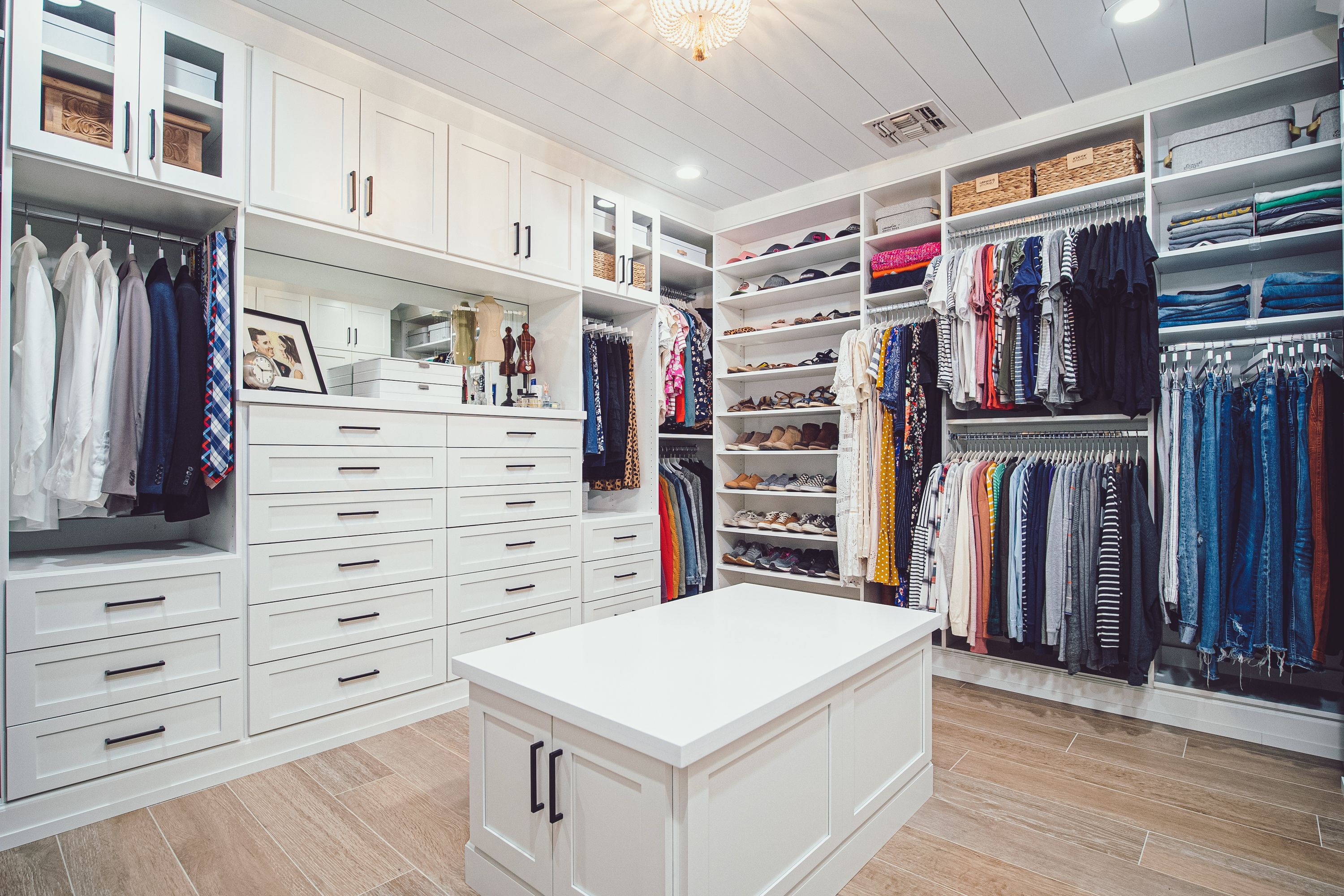
A close second is skipping a proper walk-in closet island or built-in hamper because it felt like an upgrade rather than a necessity, only to realize six months later they're back to using a laundry basket that migrates around the room. These aren't failures of the closet system itself. They're gaps that show up when a design gets rushed, which is one more reason the design phase deserves more weight in your decision than most people give it.
How to Actually Compare Companies (Beyond the Word "Quality")
Ask three questions when you're evaluating a quality closet system near you, and the answers will tell you more than any marketing page. Who is physically installing the system, an in-house employee or a subcontractor hired for the day? Are the shelves and panels cut from pre-set stock sizes or built to the dimensions of your specific space? And what happens if something needs adjustment two years from now, is there a company standing behind it or a franchise that's already moved on to the next job?
Here's the one list worth including, because these are the concrete things to check on any quote before you sign:
Panel thickness (look for 3/4-inch or thicker on load-bearing shelves) Mounting method (cleat systems outperform floor-mounted or screw-only installs) Who installs it (in-house team versus subcontracted labor) Whether the design is drawn to your exact measurements or assembled from stock modules

Bottom Line
The best quality closet system comes from a company that designs, builds, and installs as one accountable team, using materials rated to last well past the installation date rather than just through the walkthrough. That's the throughline in every failure we've seen from other companies and every long-term success story from our own installs: quality isn't a finish you can see in a photo, it's a set of decisions made months before your closet ever gets hung. Get that part right and the closet stops being something you manage and starts being something that just works, every morning, for years without a second thought.