


How Much Do Custom Closets Cost?
Blog Custom Cabinetry in Scottsdale, AZ That Brings Luxury & Organization Together
Custom closets can range from surprisingly attainable to fully luxury, depending on the size of the space, the materials you choose, and how personalized the design becomes. Most homeowners are not just paying for shelves and rods. They’re investing in a built-in storage system designed around the way they actually live.
That’s where the real conversation starts.
Because two walk-in closets can look similar in photos and land in completely different budget categories once you start talking about drawer construction, wood doors, lighting, specialty accessories, installation complexity, and finish quality. A reach-in guest closet and a fully customized dressing room simply don’t belong in the same pricing conversation.
Our Perspective as Designers
After designing custom cabinetry and storage systems for decades, one thing becomes obvious very quickly. Most homeowners aren’t really asking how much a custom closet costs. They’re trying to figure out whether it’s worth it.
Fair question.
A professionally designed custom closet changes how a home functions every single day. You feel it in the morning when getting ready is easier. You feel it when laundry stays manageable. You feel it when the floor isn’t covered in shoes and piles of clothes because everything finally has a place.
That daily improvement matters more than people think.
We’ve also seen homeowners spend money twice because they chased the cheapest option first. Wire shelving from a big box store might technically organize a closet, but it rarely maximizes storage, rarely looks integrated into the home, and almost never feels premium. Custom cabinetry changes that experience entirely.
Not every project needs to sit at the upper end of the spectrum, though. A well-designed custom closet can be tailored to different goals and priorities without sacrificing quality where it counts.
What Actually Drives the Cost of Custom Closets?
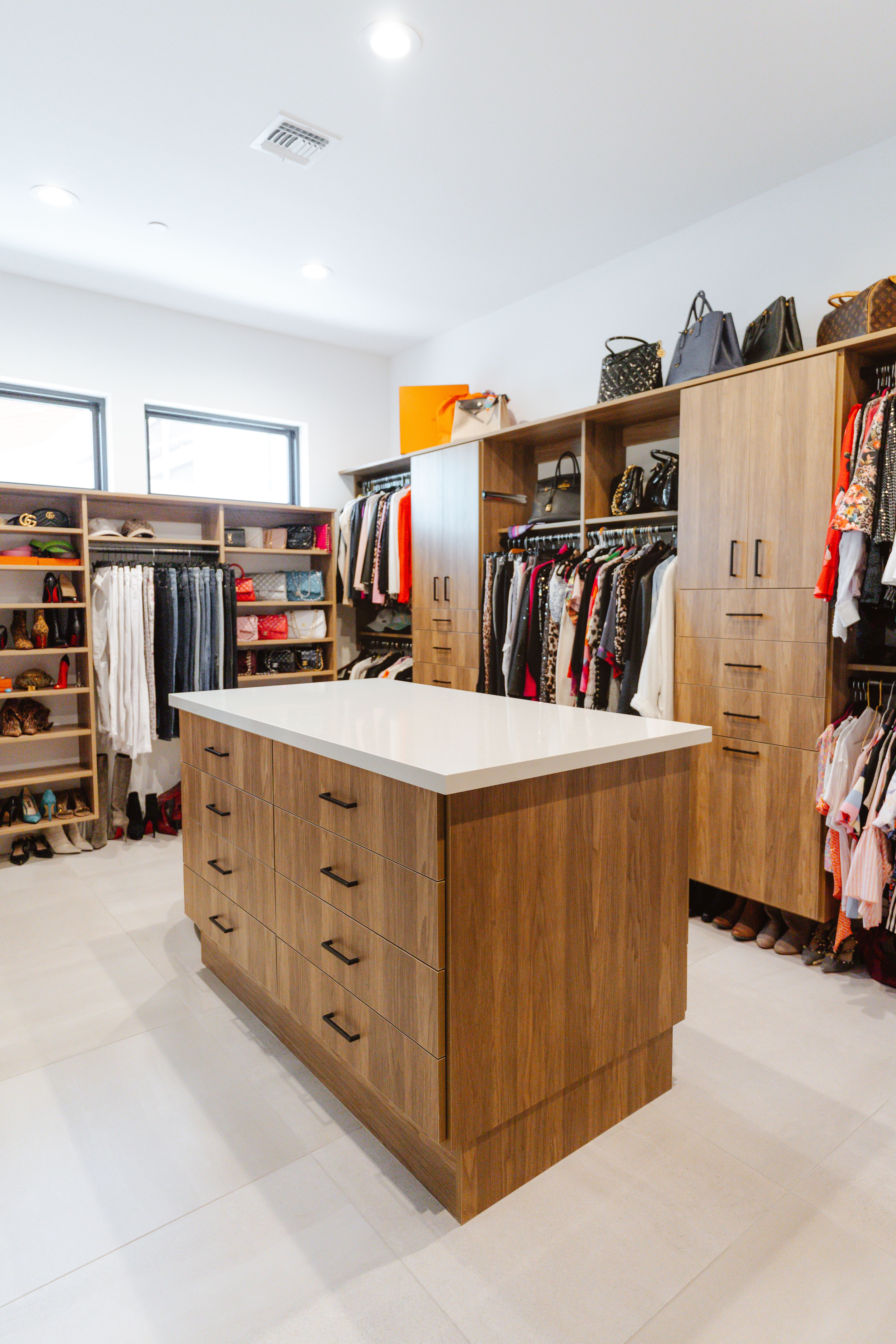
Size obviously matters. A large walk-in closet with islands, glass doors, and floor-to-ceiling built-ins will naturally require more material, labor, and design time than a smaller reach-in system.
But size is only part of it.
Materials make a huge difference. Melamine systems tend to land in a more budget-friendly category, while real wood cabinets, veneer finishes, textured wood grains, and painted wood doors move into more premium territory. The finish quality alone can completely change the feel of the room.
Then there’s the design itself.
Simple layouts with hanging sections and a few drawers stay fairly straightforward. Once homeowners start incorporating integrated lighting, jewelry drawers, pull-out hampers, hidden safes, shoe walls, valet rods, or display cabinetry, the project becomes far more custom. More engineering. More installation detail. More fabrication time.
Ceiling height affects cost too. Tall built-in cabinetry often requires additional material, trim work, ladders, or specialized installation considerations. Homes with uneven walls, older construction, or difficult access points can also increase labor complexity.
And honestly? Expectations matter.
Some clients want clean and functional. Others want their closet to feel like a luxury boutique inside their home. Both are valid. They’re just very different projects.
Walk-In Closets Usually Land Higher on the Spectrum
This surprises nobody once they think about it.
Walk-in closets naturally invite customization because there’s enough room to create zones and experiences instead of just storage. Homeowners start thinking about seating, islands, mirrors, display shelving, decorative hardware, integrated lighting, and specialized storage for watches, handbags, or collections.
That’s where custom design really shines.
A well-designed walk-in closet feels architectural. It feels connected to the home instead of added later. The cabinetry lines up properly. The proportions make sense. The drawers actually function around the user’s routine.
That takes planning.
In many remodel projects, we’re also reworking adjacent spaces to improve closet flow. Sometimes that means stealing space from a spare bedroom. Sometimes it means incorporating custom cabinetry into a bathroom remodel or primary suite renovation. Once walls move, the project shifts beyond storage and into full remodeling territory.
That’s also why comparing custom closets online becomes difficult. Homeowners are often comparing completely different scopes without realizing it.
Reach-In Closets Can Still Feel High End
Smaller closets don’t have to feel basic.
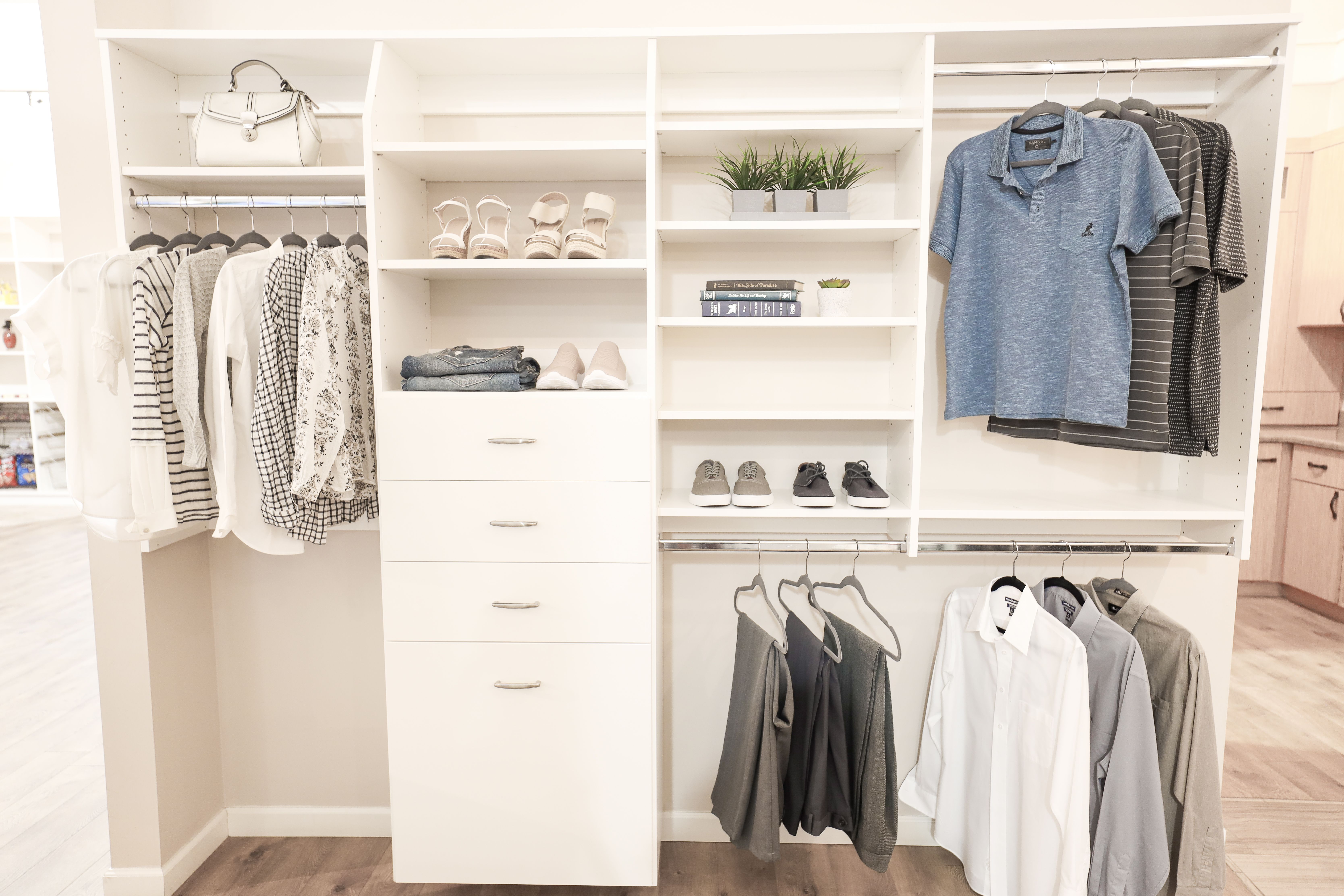
Some of the smartest custom closet projects we’ve designed were compact spaces with very intentional storage planning. When every inch matters, custom cabinetry becomes even more valuable because there’s less room for wasted space.
Built-in drawers eliminate bulky furniture. Vertical storage creates more usable hanging space. Adjustable shelving adapts as needs change over time.
And visually, the transformation can be dramatic.
Standard wire shelving tends to make a closet feel temporary. Finished built-ins with matching wood doors, decorative panels, and integrated lighting make the room feel like part of the home’s architecture. Even smaller spaces can feel polished and luxurious when the proportions and materials are right.
Frankly, homeowners are often shocked by how much larger a closet feels once it’s professionally designed.
Material Selection Changes Everything
This is one of the biggest factors in custom closet pricing, and it’s where homeowners sometimes get overwhelmed.
There’s a massive difference between basic shelving material and high quality custom cabinets designed to last for decades. Thickness, edge detail, hardware quality, finish consistency, drawer construction, and durability all matter.
A lot.
Melamine systems remain popular because they’re durable, clean, and available in a wide range of finishes. They work especially well for homeowners wanting a refined built-in look without stepping fully into luxury wood cabinetry pricing.
Real wood cabinets sit in another category entirely. They offer warmth, depth, and a furniture-quality appearance that’s difficult to replicate. Painted wood doors, stained finishes, and textured wood grains create a far more custom feel, especially in luxury homes.
Hardware also changes the experience more than people realize.
Soft-close drawers and doors have become standard expectations in premium custom cabinetry. Beyond that, upgraded drawer systems, hidden hinges, specialty pulls, and integrated accessories all contribute to the final investment level.
Our perspective? Homeowners usually notice the hardware every single day long after they stop noticing the shelving itself.
Custom Design Is What Separates Great Closets From Expensive Ones
Throwing expensive materials into a bad layout doesn’t create a luxury closet.
We’ve seen beautiful cabinetry wasted on awkward designs that ignore how the homeowner actually uses the space. Too many drawers in one area. Hanging sections that don’t fit clothing properly. Shelves placed too high to reach comfortably.
Custom design should solve problems.
A good designer studies routines. Do you fold clothes or hang them? Do you own more shoes or more handbags? Do you travel often? Do two people share the closet? Does someone need dedicated space for dresses, suits, hats, or athletic gear?
The answers shape the layout.
That’s why truly custom closets feel effortless once they’re installed. The space starts working with you instead of against you. Everything flows naturally because it was designed around real habits rather than generic dimensions.
Honestly, this is where online pricing guides fall apart. They can talk about materials all day long, but they can’t account for the value of thoughtful design.
Installation Quality Matters More Than Most People Realize
Even premium custom cabinetry can look disappointing with poor installation.
This part gets overlooked constantly.
Walls are rarely perfectly straight. Floors shift. Corners move over time. Skilled installers adjust cabinetry on-site so reveals stay consistent, doors line up properly, and the finished product feels built into the home instead of dropped into the room.
That craftsmanship matters visually, but it also affects longevity.
Cheap installations tend to reveal themselves over time through sagging shelves, misaligned drawers, gaps, and premature wear. Quality installation protects the investment and keeps the space functioning properly for years.
And yes, installation complexity absolutely affects overall cost.
Multi-story homes, tight staircases, high ceilings, older homes, and remodel conditions all add labor considerations that homeowners don’t always see from the outside.
Lighting Can Completely Change the Feel of a Closet
A closet without proper lighting feels smaller, flatter, and less premium no matter how beautiful the cabinetry is.
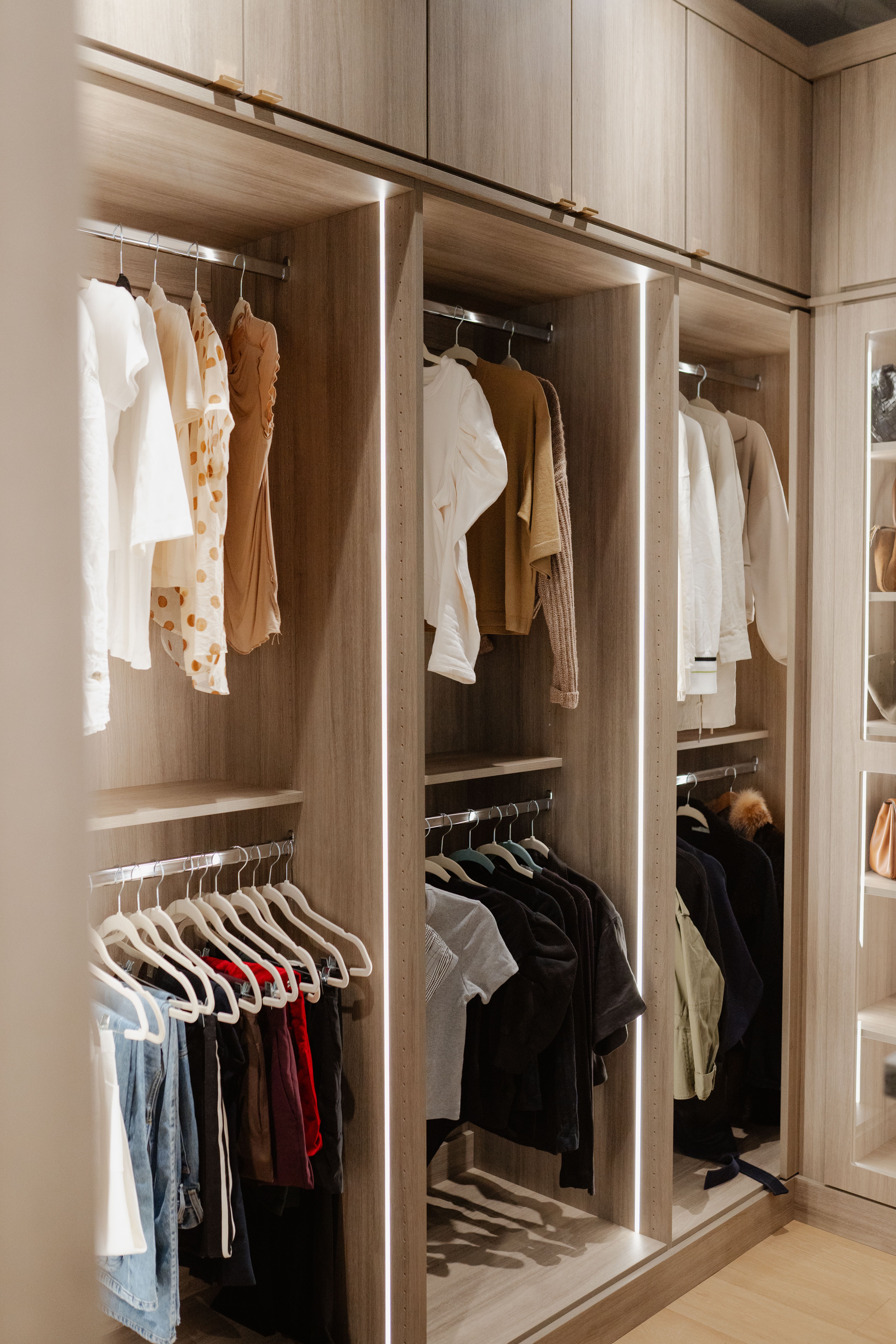
Integrated lighting has become one of the most requested upgrades in custom closets, especially in luxury remodel projects. LED shelf lighting, hanging rod illumination, toe-kick lighting, and glass cabinet lighting all create a more elevated experience.
It’s functional too.
People actually see their clothing better. Dark corners disappear. Colors become easier to distinguish. Getting dressed becomes faster and less frustrating.
From a design standpoint, lighting also helps highlight the cabinetry itself. Wood textures feel richer. Finishes feel more dimensional. The room photographs dramatically better.
Would we recommend lighting for every closet? Not necessarily.
But in larger walk-ins or premium custom cabinetry projects, it’s usually one of the upgrades homeowners appreciate most afterward.
Why Custom Closets Often Add More Value Than People Expect
This part gets underestimated all the time.
A well-designed custom closet improves daily life immediately, but it also improves how buyers perceive the home later. Storage sells houses. Organized spaces photograph better. Built-in cabinetry creates a more finished, upscale impression throughout the property.
And unlike trendy finishes that can age quickly, functional storage rarely goes out of style.
Homeowners also tend to use the rest of their home differently once closets are organized properly. Bedrooms feel calmer. Laundry rooms function better. Bathrooms stay cleaner because overflow storage finally exists somewhere else.
That ripple effect is real.
Now, will every custom closet dramatically increase resale value dollar-for-dollar? Probably not. Remodeling doesn’t always work that way.
But high quality custom cabinets absolutely help a home feel more premium and more complete in competitive markets.
The Cheapest Option Usually Looks Cheap
There’s really no polite way around this.
Low-end closet systems often prioritize speed and price over durability, design, and finish quality. Thin materials, exposed hardware, limited customization, and generic layouts create a result that rarely feels integrated into the home.
Homeowners notice that difference immediately once they compare products side by side.
Doors feel lighter. Drawers wobble. Finishes look flat. Shelving flexes under weight. The entire room feels more temporary.
That doesn’t mean every homeowner needs ultra-premium wood cabinetry. Not at all.
But there’s usually a middle ground where the project still feels custom and built-in without chasing every luxury upgrade available. A good designer helps identify where to spend and where to simplify.
That balance matters.
Remodeling a Closet Is Often About More Than Storage
This happens constantly during consultations.
A homeowner starts by wanting better closet organization, then realizes the entire primary suite isn’t functioning well. Suddenly the conversation expands into bathroom cabinetry, linen storage, laundry integration, or even a complete bedroom remodel.
Closets rarely exist in isolation.
That’s why companies specializing in custom cabinetry and remodeling often approach closet projects differently than companies selling only shelving systems. The bigger picture matters. Sight lines matter. Material coordination matters.
When the closet connects visually to nearby bathrooms, bedrooms, or built-in storage features, the entire home feels more cohesive.
And honestly, that cohesion is what creates a luxury feel more than any single accessory ever will.
Custom Closets Are Personal Spaces
That sounds obvious, but it changes how the design process works.
Kitchens are shared. Living rooms are public-facing. Closets are deeply personal. They reflect routines, habits, priorities, and lifestyles in a way few other spaces do.
Some homeowners want minimal and hidden. Others want display storage that feels almost retail-inspired. Some care most about efficiency. Others care most about aesthetics.
Neither approach is wrong.
The best custom closets feel tailored to the homeowner rather than designed to impress strangers online. That’s where thoughtful custom design becomes far more valuable than simply adding more cabinetry.
A smaller closet designed perfectly for the user will almost always outperform a larger poorly planned one.
Bottom Line
So, how much do custom closets cost?
More than basic shelving systems. Less than many homeowners expect once they understand the long-term value.
The final investment depends on the size of the space, the level of customization, the materials selected, installation complexity, and how refined the finished product becomes. A simple built-in reach-in closet lands very differently than a luxury dressing room with premium wood cabinets, integrated lighting, custom design details, and full-height cabinetry.
But here’s the part we tell homeowners all the time.
The best custom closets don’t just store things better. They make your home feel calmer, cleaner, and easier to live in every single day. That’s the real return.
And when the design, craftsmanship, and installation are done correctly, it stops feeling like added storage and starts feeling like part of the architecture of the home itself.