


Can You Put a Queen Mattress in a Wall Bed? What Fits and What Doesn’t
Blog
Can You Put a Queen Mattress in a Wall Bed? What Fits and What Doesn’t
TL;DR
Yes, a queen mattress fits in a wall bed (also called a Murphy bed), as long as the mattress is no thicker than about 10 to 12 inches, with the exact limit set by the depth of the cabinet. A standard queen measures 60 by 80 inches, and queen wall bed frames are built around that footprint. Foam, latex, and most hybrid mattresses under the thickness limit work well, while thick pillow-top models over 12 inches generally do not fit.
_
Most people who ask this question aren’t really asking whether a queen will physically go into a cabinet. They want to know whether a wall bed can be a real bed, one that a guest, a parent, or the two of you could sleep on comfortably for a week, and not a thin pad you apologize for. Underneath that sits a quieter worry: that folding a bed up against a wall means giving up something about how it sleeps.
That worry is mostly unfounded. Modern wall beds are engineered around a full-size mattress, and the mattress stays flat and supported whether the bed is up or down. What actually decides how good the result is has less to do with the queen itself and more with the thickness you choose, the weight the mechanism has to balance, and what the room allows once the bed is open.
What’s the designer’s take on choosing a queen mattress for a wall bed?
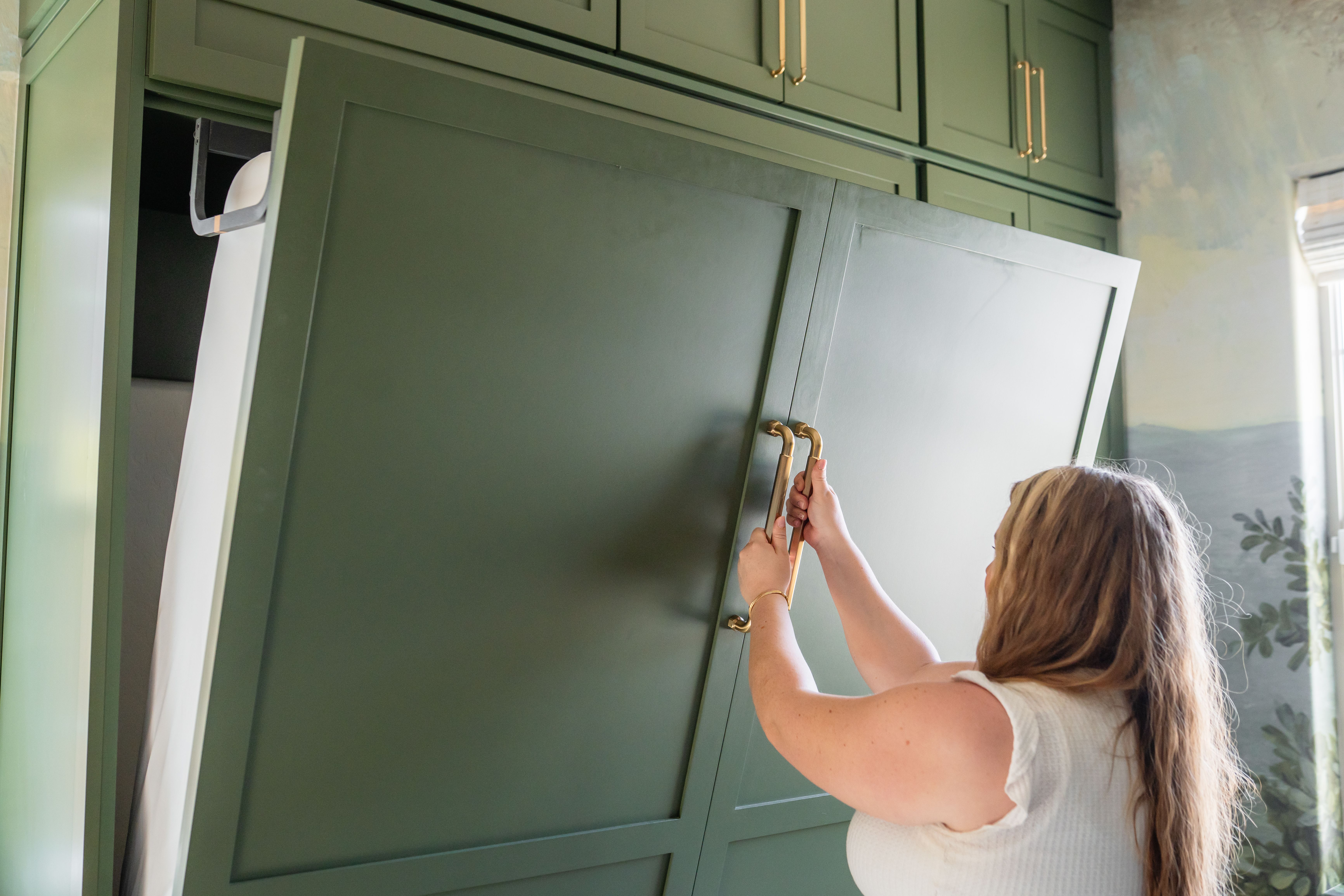
Choose the cabinet depth around the mattress you want to sleep on, and don’t let a generic “any queen will work” answer set the plan. Most advice online treats the mattress as a passive object you measure at the end, which is backwards. In the 15 years I’ve been measuring rooms for these, the projects that disappoint are almost always the ones where someone bought a 14-inch pillow-top first and then discovered the cabinet needed to be much deeper to hold it, which pushes the whole unit further into the room every single day, including the 29 days a month when nobody is sleeping on it.
My honest preference for most homes is a 10-inch medium-firm foam or hybrid mattress in a cabinet sized to match. It sleeps beautifully, it keeps the closed cabinet slimmer, and the two or three inches you give up compared with a luxury-thick mattress are inches nobody notices lying down but everybody notices walking past a cabinet that sticks out. A guest bed doesn’t need to be a showroom bed, and a primary-use wall bed in a small apartment benefits even more from restraint.
How thick can a queen mattress be in a Murphy bed?
The practical ceiling is 10 to 12 inches, and the number you land on depends on how deep the cabinet is built. A deeper cabinet gives you the extra two inches, but it also projects further into the room, so it’s a real tradeoff and not a free upgrade. Thickness is measured on the mattress itself, compressed height included, so a mattress sold as 12 inches that has a plush quilted top can behave closer to 13 once it’s sitting in the frame.
Because we build every system as custom work with no stock sizes, the depth is something we set around the mattress, not something you inherit from a catalog. That matters here more than almost anywhere else in the house, since a stock cabinet forces the mattress to conform to it, and the mattress is the part you’ll feel every night.
Can I use the mattress I already own?
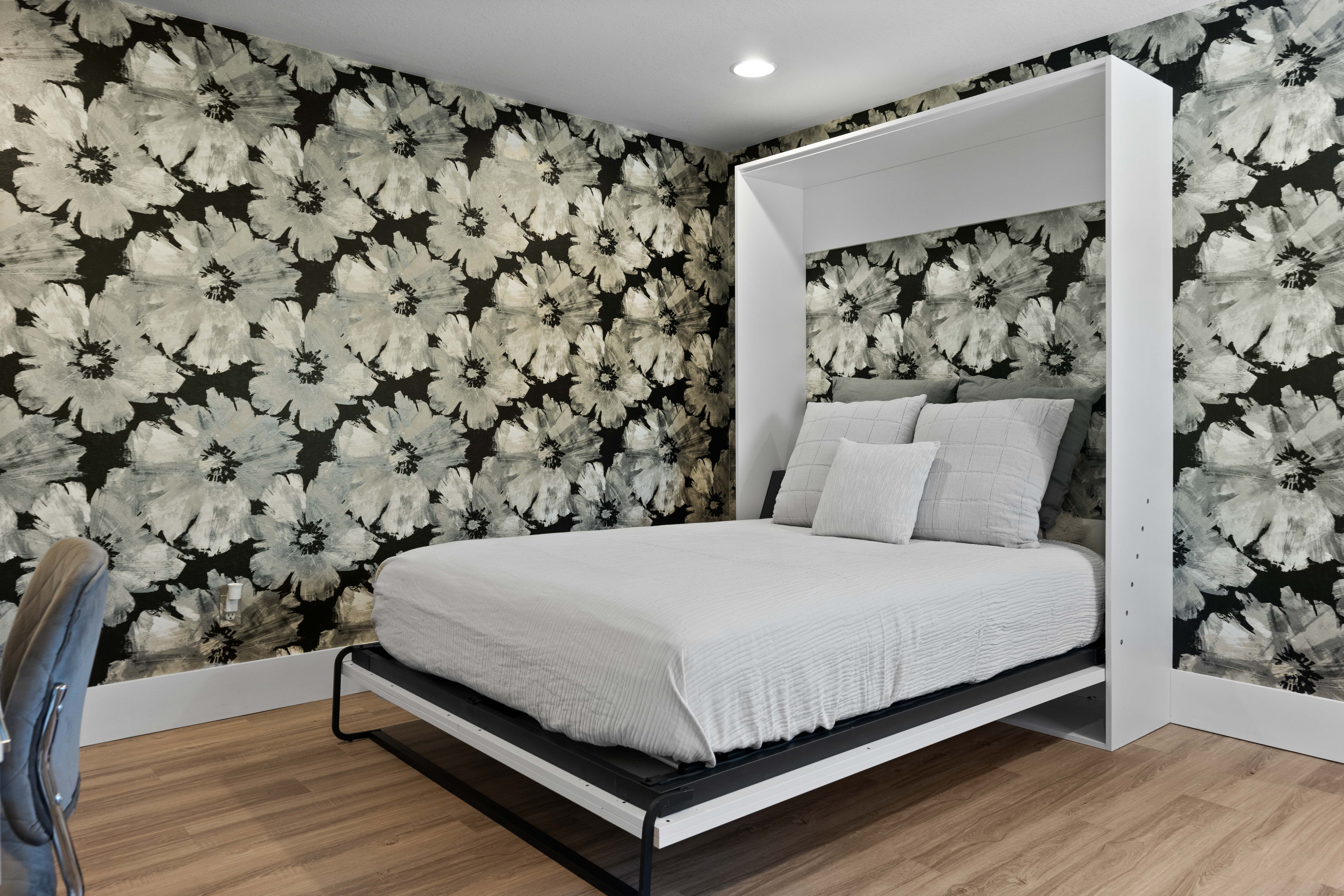
Often yes, if it’s within the thickness limit and its weight is reasonable for the mechanism. Plenty of homeowners assume they have to buy a special “Murphy bed mattress” and then discover their current queen would have fit fine; the trade is that a very old, very soft mattress can sag against the retaining strap when the bed is upright, and that’s a reason to replace it with something firmer, not a reason the cabinet won’t take it.
What to check on your own mattress is straightforward: the true thickness with a tape measure, its weight, and whether it has the kind of rigid edge or loose pillow top that shifts when tipped vertical. A mattress that holds its shape when stood on end will behave the same way inside the cabinet, and one that slumps when you lean it against a wall is going to slump in there too.
Does mattress weight affect how a wall bed lifts?
Yes, because the lift mechanism, whether spring or piston, is balanced to a specific load, and a mattress that’s much heavier or lighter than that load makes the bed either hard to raise or inclined to drift down. A foam queen might weigh in the range of sixty to ninety pounds, while a dense hybrid or latex model can pass a hundred, and that difference is enough to change which springs or pistons should be installed.
This is the detail I’d most want a homeowner to tell their designer before anything gets built. The mechanism gets matched to your actual mattress, and swapping to a much heavier one five years later can make the bed feel stiff or unsafe to lower, so it’s worth deciding on the mattress you’ll realistically keep.
Should a queen wall bed open vertically or horizontally?
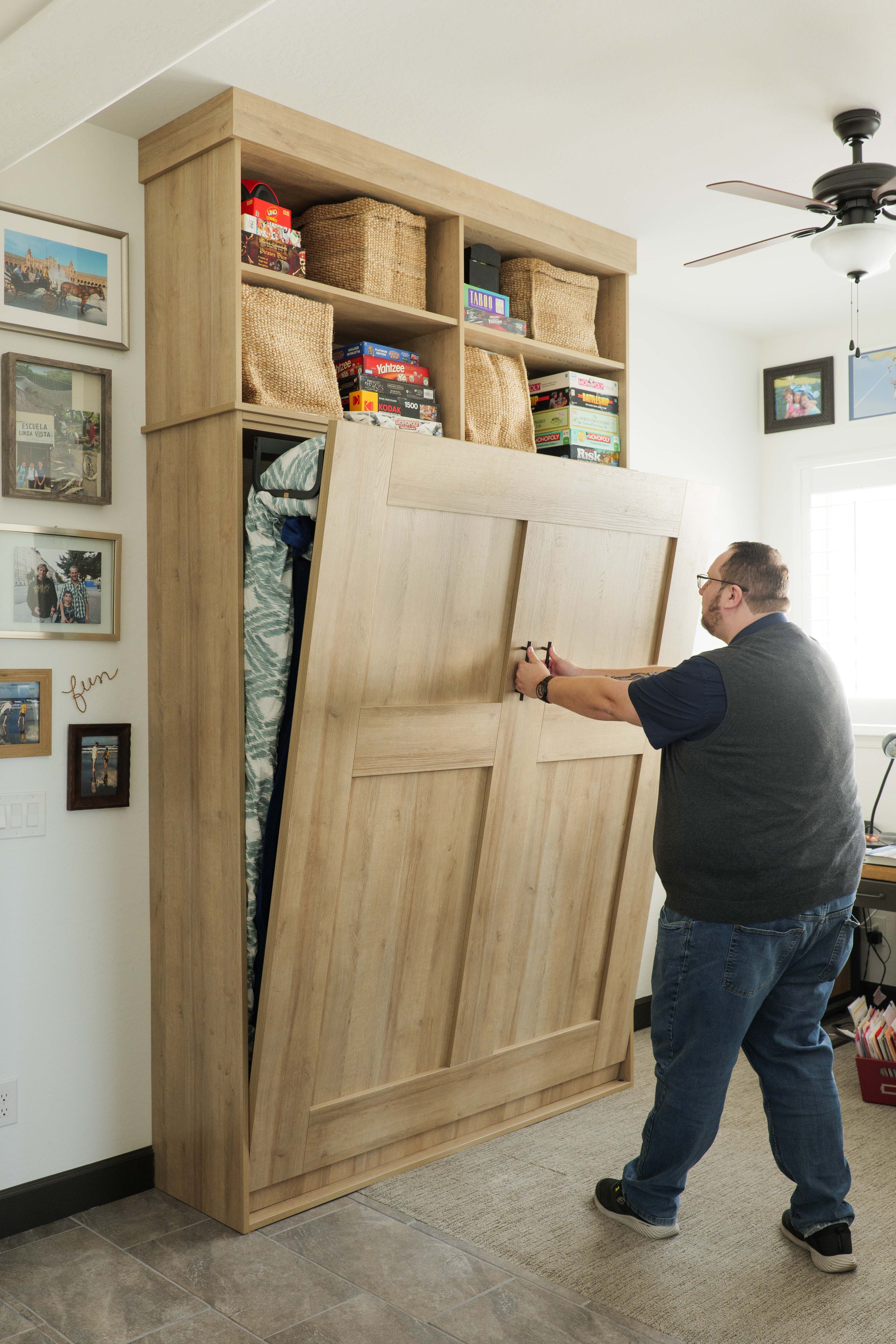
Choose vertical if the wall has the ceiling height and you want a narrower footprint, and choose horizontal if the ceiling is low or the wall is wide and short. A vertical queen stores the 80-inch length upright, so it needs a ceiling comfortably above that along with room for the cabinet, while a horizontal (side-mount) queen turns the mattress on its long edge and needs more wall width but much less height.
Neither orientation changes which mattress fits, since the thickness limit applies to both. What changes is the room: a vertical bed reaches a little over seven feet into the space when it’s open, whereas a horizontal one extends closer to five, and in a small office or guest room that difference decides whether you can still walk around the bed or whether the door will swing into the footboard.
What do homeowners overlook about the room itself?
They overlook the things around the bed, such as the outlet behind where the cabinet will sit, the vent in the floor where the bed lands, and the door that needs to open while the bed is down. These are rarely the first questions people ask, yet they’re the ones that tend to cause rework after the cabinet is already built. Before anything gets ordered, I’d collect the following:
- The true thickness and weight of the mattress you plan to use
- Wall width and ceiling height at the planned location
- Clear floor space at the foot of the bed when it’s open
- Locations of outlets, switches, and floor vents that the cabinet or bed will cover
A design that accounts for those things at the start looks effortless afterward, and one that discovers them mid-install tends to look like a compromise.
Why does in-house design and installation matter for a wall bed?
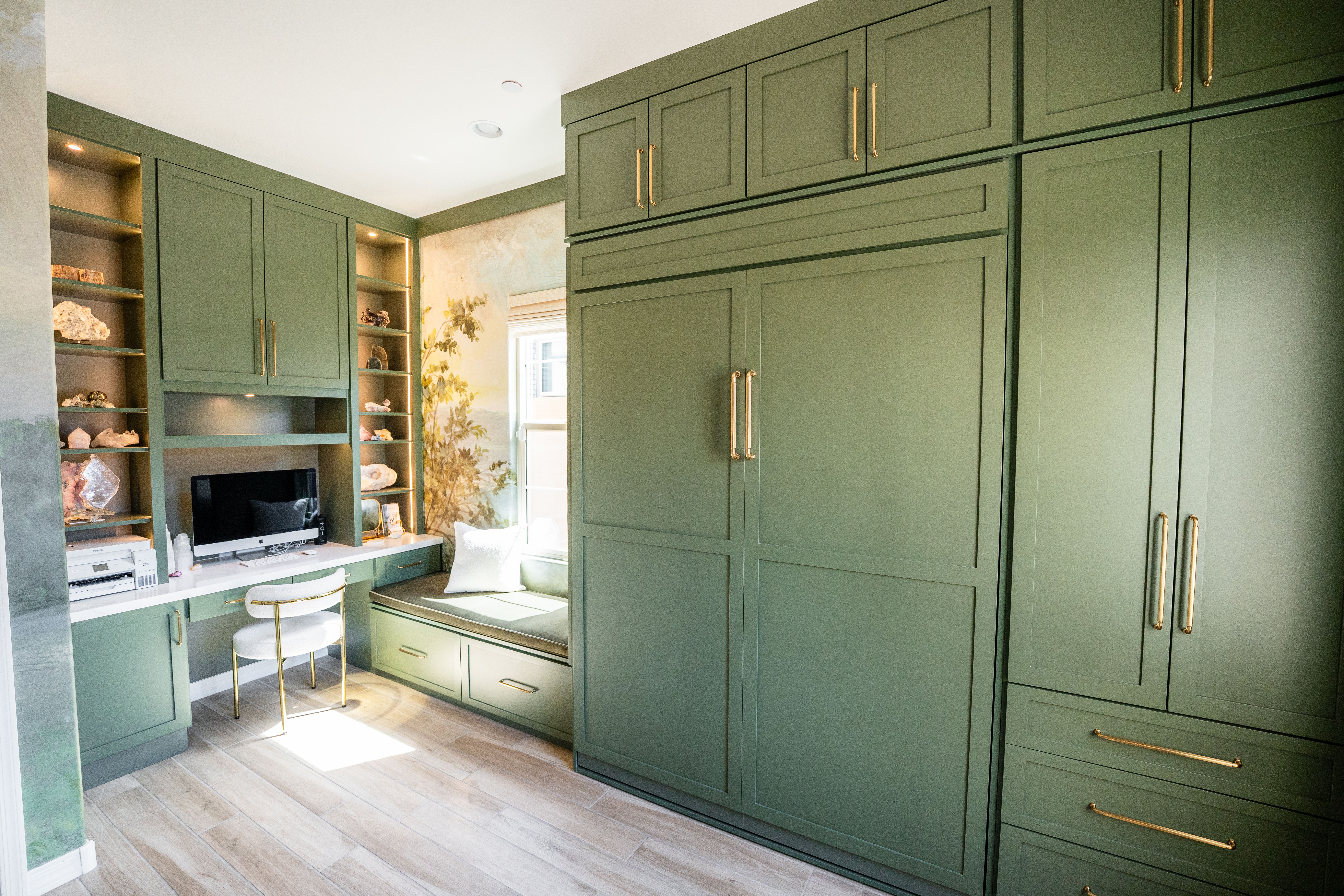
It matters because a wall bed is a piece of furniture that moves, and the person who measured your mattress and room should be the same person responsible for how it operates once it’s mounted. Classy Closets handles design, construction, and installation as a single in-house team, so the details we’ve covered, from mattress depth to mechanism load to door swing, don’t get lost between a salesperson, a fabricator, and a separate installer.
That consistency is also where experience builds up. Across the Classy Closets network, the company has completed more than 150,000 homes company-wide, and the useful part of that number isn’t the volume itself but how many mattress, wall, and ceiling combinations have already been worked through. The mistakes that tend to surface, a cabinet too shallow for the chosen mattress or a mechanism mismatched to its weight, are ones we’ve watched go wrong the same way more than once, which is why we ask about the mattress before we draw the cabinet.
How do I find a wall bed company near me that will get this right?
Look for one that asks about your mattress before it quotes a cabinet, because that single question reveals whether the design starts from how you’ll sleep or from what’s already on the shelf. A company near me, or near you, that builds to order should be able to tell you the mattress thickness the cabinet will support, the weight range the mechanism is balanced for, and who will be standing in your room on installation day.
If those answers are vague, or if the cabinet comes in a handful of fixed sizes, you’ll end up adapting your bedroom to the product. Custom work flips that, and with a queen the stakes are higher than most people expect, since an extra inch or two of mattress and a mismatched lift can be the difference between a bed that gets used and one that quietly becomes a storage wall.
Bottom Line
A queen mattress fits in a wall bed as long as it stays within roughly 10 to 12 inches of thickness, and the cabinet depth, mattress weight, and room layout should all be settled around it from the start. The reason this works so well is that a properly built queen wall bed gives you a full-size, genuinely comfortable bed at night and a clear, usable room during the day, whether that room is an office, a guest space, or a bedroom that has to do double duty. Done well, you stop thinking about the bed at all, which is exactly how furniture you rely on every day should feel.